Module 2 – first sketch
The goal of the first week is to get to know the material and its constrains and limitations, as well as the code (arduino) we are going to use. A single LED is so simple and used everywhere that is somewhat neglected, however, is has a lot of different properties that could be used in an interactive experience. There is the different characteristics of the behaviors of a point light like the pattern, the stages in-between each pattern (transition), the flow, etc. The duration of each pattern, the speed, the intensity (brightness) of the light, etc.
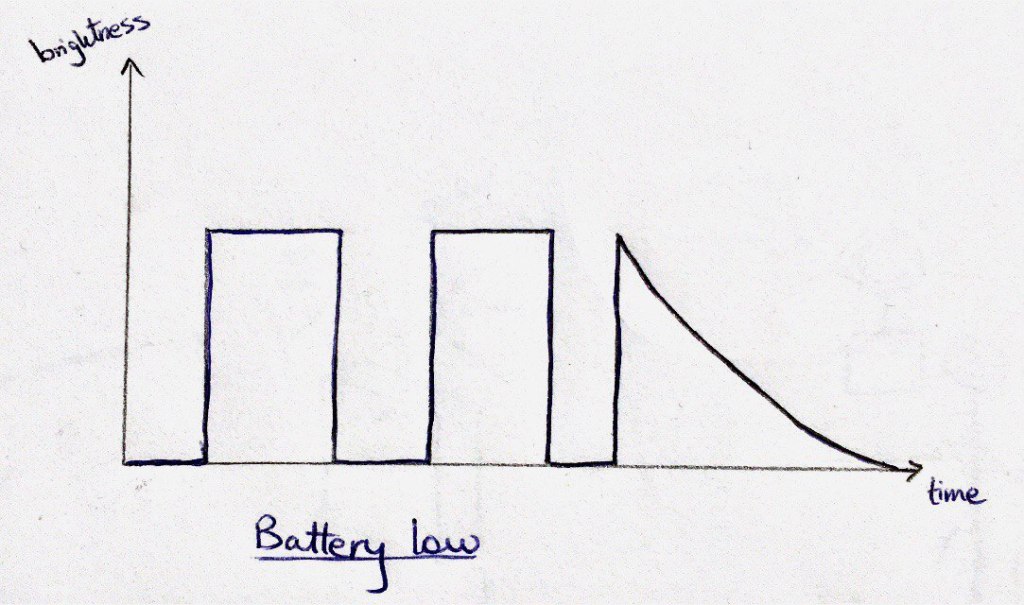
The first example I tried to pick to understand the material more, was a pattern I called “maybe notification”. The idea was to tweak an already-working code and then interpret what it was expressing. This particular light pattern did not necessarily work as a notification, but the fading out effect reminded me of “dying”. The first two pulses could work as “attention grabbers” and then we have a “fading out” curve, which reminded me of “dying”, i.e. the battery is extremely low and is about to die.
We tested a similar code with a green colored single led. We realized the light pattern did not seem as alarming as when the led was red. We concluded that color plays a big role in the message a light pattern is giving, and in every concept/environment, this message, could mean something different. We thought it’s an interesting concept to investigate but we got informed that this matter is out of the focus point of this course.
The other examples, we worked with briefly, just to understand the code and the material, and to see if we come across anything interesting to dig deep into.
The most difficult part of the first week was to find interesting patterns to implement and explore with. There are a lot of sources for getting inspiration from. We walked around the studio to see what patterns other pairs are using, some were interested in the human personalities or emotions like happiness and anger, some were getting inspired by the sounds in the nature that have some sort of a pattern in them. Like a heartbeat. We thought transforming a sound or movement wave into a light wave could be interesting. So we picked the movement of the water in a waterfall, watched waterfalls on YouTube, tried to separate the different stages based on the speed of the water, etc. Then we realized it is too complex and vague, to show a speed/movement of water in a light pattern. It is not clear enough. Therefore, if no one can understand what it is, the light pattern cannot be expressive.
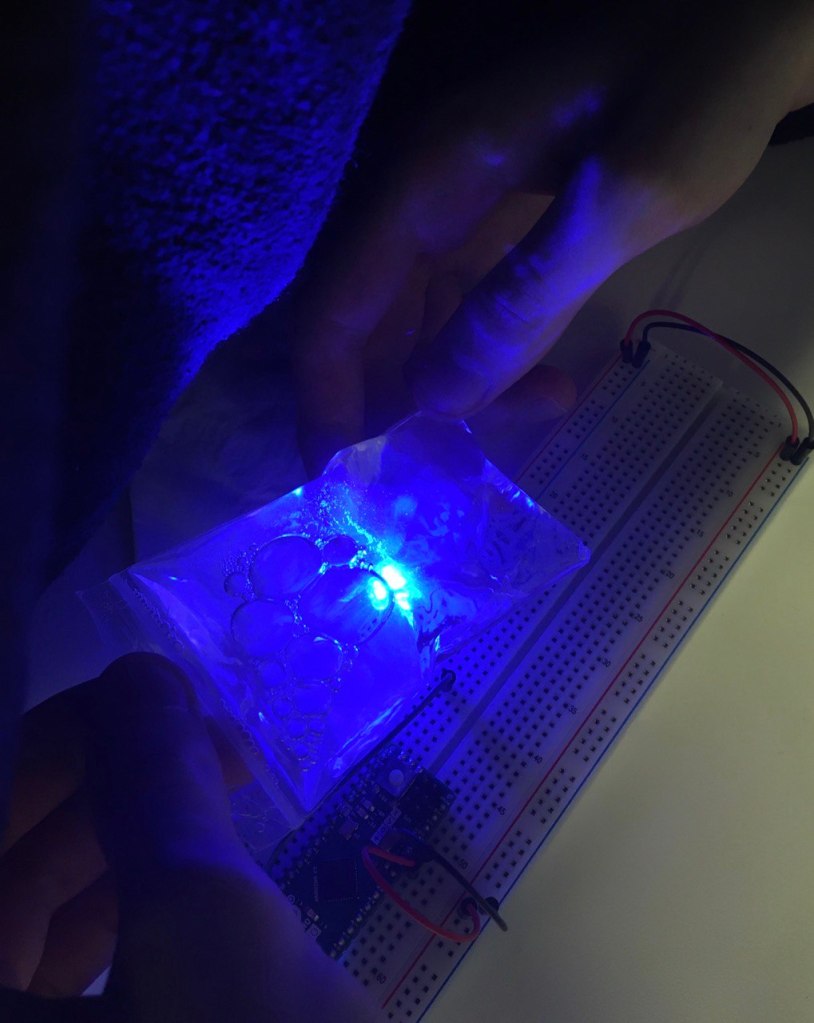
We also tried out some materials to see how the light would change if it goed through them.
 My Design Journal