Artificial Intelligence in IxD
Artificial intelligence may sound like an abstract area that only engineers and researchers deal with, at least that is how I felt about it until recently. However, we as normal citizens, come into contact with this matter on an everyday basis, when doing online shopping or browsing e.g. Netflix. In this week, we are working in AI in the context of everyday smart objects.
Readings and seminar
In this section, I will talk about some of the points I found interesting in the papers.
One point I realized after reading Computational Composites [1], was the huge difference between a design ‘tool’ and a design ‘material’ and how it can be confusing. I wonder if there are any cases where something is a material and a tool at the same time in a specific design process. What is the main difference between these two terms on a more general level? Maybe the fact that tools, as used in a process, remain unchanged after the process, so they are used to achieve something. Whereas materials are used and changed after the process is done, they are either mixed with something else, or some of their properties get changed. Something like a pen when writing something, although the ink of it gets used in the process of writing, but does that change the essence of the pen? This point was also discussed in the seminar. Some of my classmates were also confused about why we need to compare these “materials” on such a level that they do in the paper, and why do we even call computers a material when it is so complex (considering it a technology). When I was reading the paper, this thought never came to my mind. Maybe they have a point, but I guess it really comes down to the different terminologies and meanings behind them, in this case, tool and material, and technology. I was convinced by the authors about their argument, but I also see where these opposing thoughts could come from. We also need to consider the fact that this paper is from 2007, so it is relatively old, and in my opinion, one of the main purposes of this paper could have been to introduce this notion of using computers in design by trying to compare computers with other “regular” materials in design, pointing out the differences and the similarities to make their point. Another thing is that I come from an architecture/interior design “background” so seeing the examples in this paper about the “computational concretes” and also the “smart textiles” were really intriguing to me, specially knowing how different domains in design can be practiced together, can get combined. So reading this paper was definitely an eye opener for me.
Moving on to the second paper[2], the word “form” or “formal”, are mainly associated with the appearance of the objects, the shapes. This is not how the word “form” is used in the papers, though; with which I have a problem. Why do we have to use words that are commonly associated with something, and try to link it to something else, even if the primary association is wrong or not entirely correct. Why create confusion, where instead we could easily use another word?
Another point from the same paper is that they use the words “smart” and “intelligent” / “intelligence” a lot. But looking more closely to the three objects presented, none of them use Artificial intelligence! So they cannot learn from the user’s behavior and all they do have are sensors. This created a bit of a confusion among me and my team, which actually led to interesting discussions and better design choices.
In this paper, the authors critique some of the “smart speakers” in the market e.g. Google Home and Amazon Echo, saying their intelligence is not conveyed through their material form [2]. Me and my teammates had a discussion about this and we all agreed that, even though the point that they make is true from a design stand point, they are okay as they are (from a customer satisfaction and business stand point) for being everyday smart objects that are used in any kind of household, and they serve the purpose they were bought for.
Giving form to AI – Dave the Duvet.
After some brainstorming and evaluating the ideas we thought were related to our everyday life struggles/situations, we decided to go with a smart bed or a smart quilt, aiming to solve the issue(s) of falling asleep at night and/or waking up in the morning. This topic is specially important to consider and look into in these days that a pandemic is going on. It is hard to be on a regulated schedule in which you get enough sleep, when you are always at home. We decided to go with the smart quilt and not the bed, because imagining and discussing it among us, we saw more of a potential in the quilt for having a character than in the bed. There are some ways for the user to interact with a bed of course, but a bed’s properties can’t enable it to move so much, and therefore, they cannot respond to the user in an ‘authentic’ way, i.e., as stated by Rozendaal et al. (2018) , “using a product’s inherent structures and materials” [2], regarding helping the user to sleep or wake up (and without using the typical output of sounds or visuals).
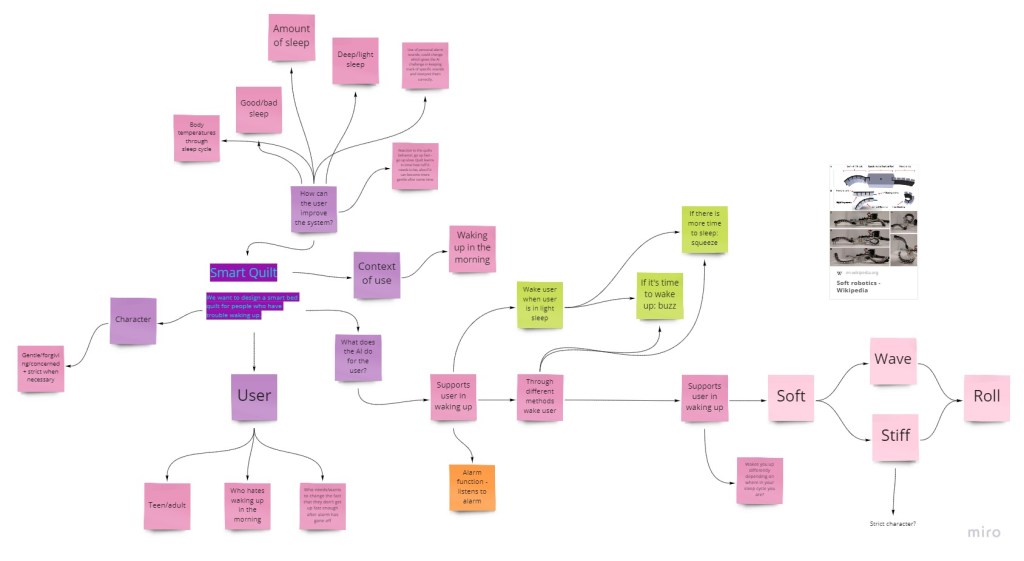
We wanted to narrow down our focus even more, so we decided to address the ‘waking up in the morning’ and ‘snoozing for too long’ issue. Our reasoning was simply the fact that the matter of ‘falling asleep at night’ is already well taken care of by a various range of digital and non-digital products.
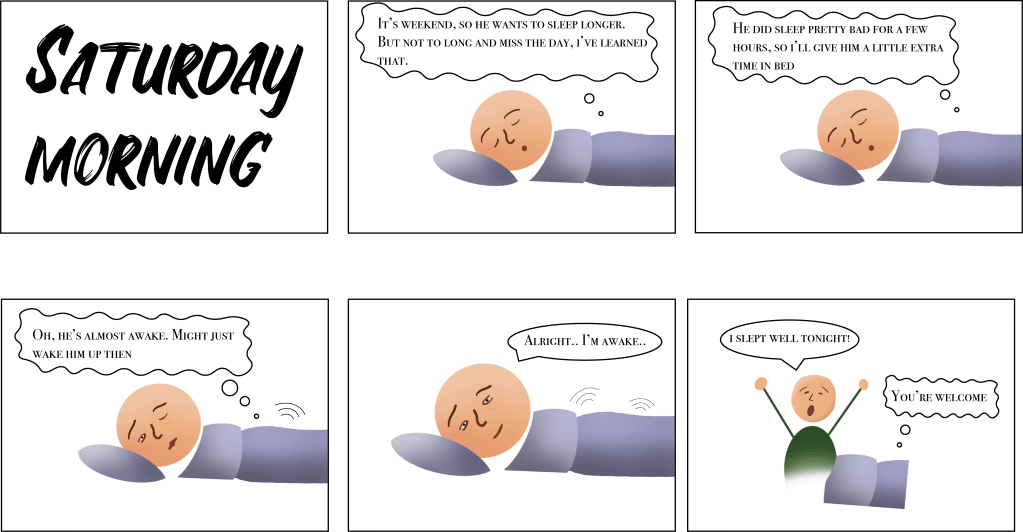
The implementation of AI is in the object learning from the user’s behaviors and patterns in sleeping. i.e. it collects data from the user and adapts itself to be able to provide the best solutions for the user. It is also able to wake the user up when they are in the light stage of their sleep cycle. So it can monitor the sleep cycles of the user. It will know if the user had woken up during the night or not, so it will try to let the user sleep a bit more. Another point in this design is that the quilt is connected to the user’s alarm setting (of their phone). This way the quilt know when the user must wake up and will act accordingly. Something important to mention is that the quilt is not an equivalent for an alarm clock. This object is supposed to help the user get enough and quality sleep, taking their sleep cycles, at what time they have to wake up, their quality of sleep, and to what technique they respond well.
We thought of different temporal states the quilt can have, varying from the quilt being “forgiving” to it being “strict”. These can be considered as the characters we gave to the quilt to make it convey the fact that it is intelligent and that it changes its behavior in response to its user’s actions.
Soft state: This is the primary state of the quilt that is similar to other regular quilts.
Squeeze state: This state is related to the quilt being comforting, in the situations such as when the person wakes up in the middle of the night or earlier than they were supposed to. This state can also be triggered by the user herself when they hug/squeeze the quilt. As discussed in our group, we realized there are people who are used to be hugged after they wake up in order for them to get out of the bed.
Wave state: This is a playful way for the user to wake up. It also enables the temperature to go down a little with the air flow it causes in the area of the bed, so it lessens the coziness of the night and the takes away the heat of the user’s body.
Stiff state: This is more related to the “strict” character of the quilt, causing the opposite feeling of the “soft” quilt.
Roll state: This is more of a straightforward approach to waking someone up, and it could be considered as the most strict state of Dave the Duvet, since it doesn’t have the playfulness of the Wave state.
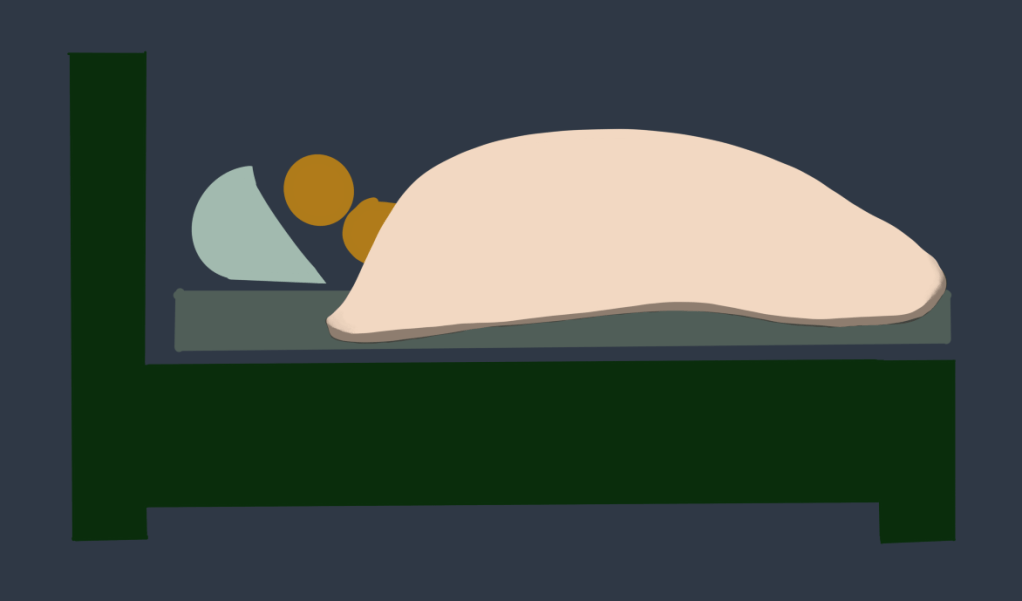
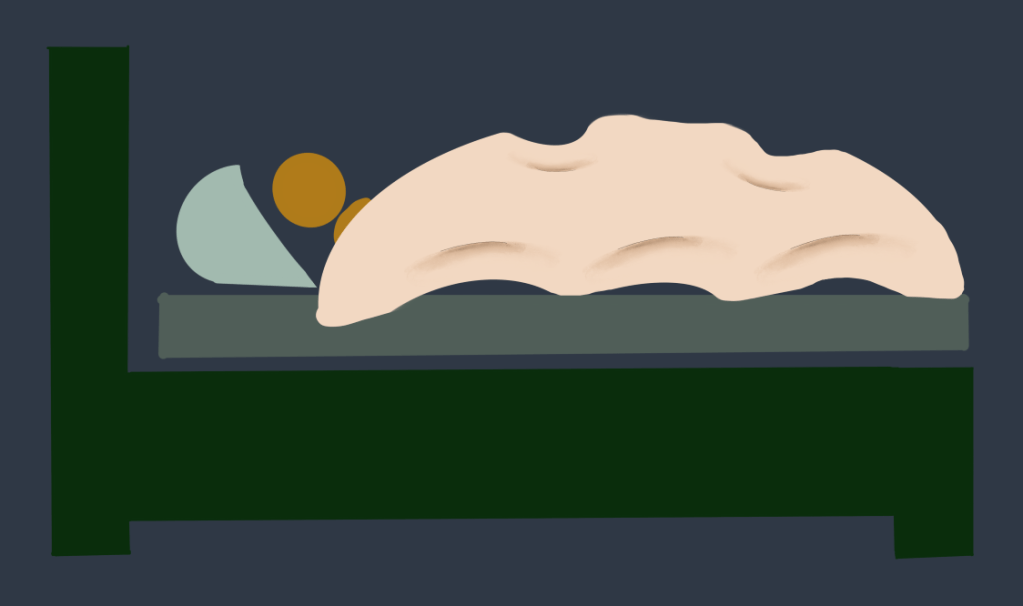
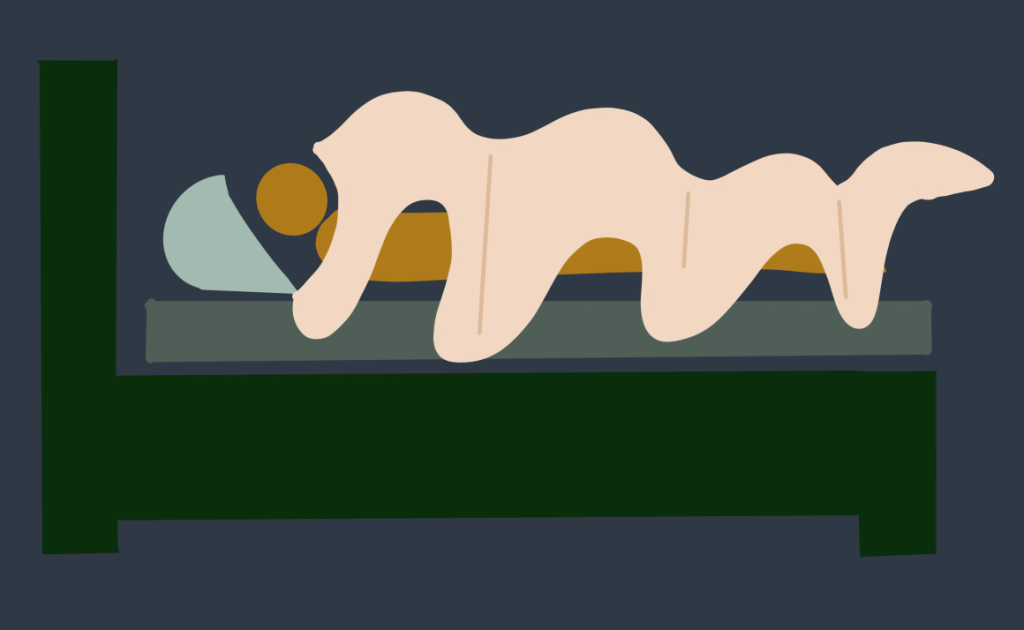
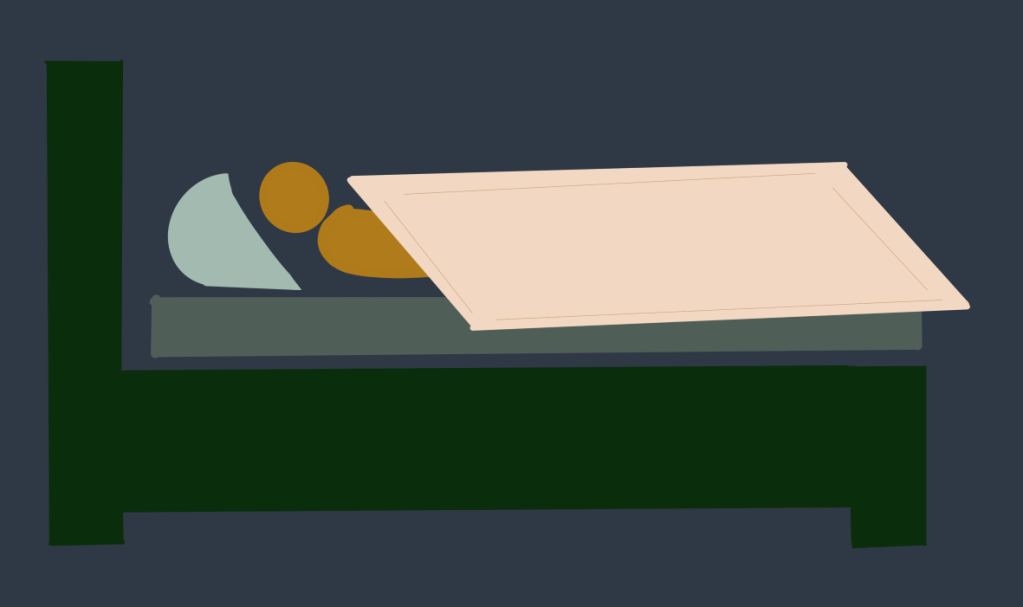
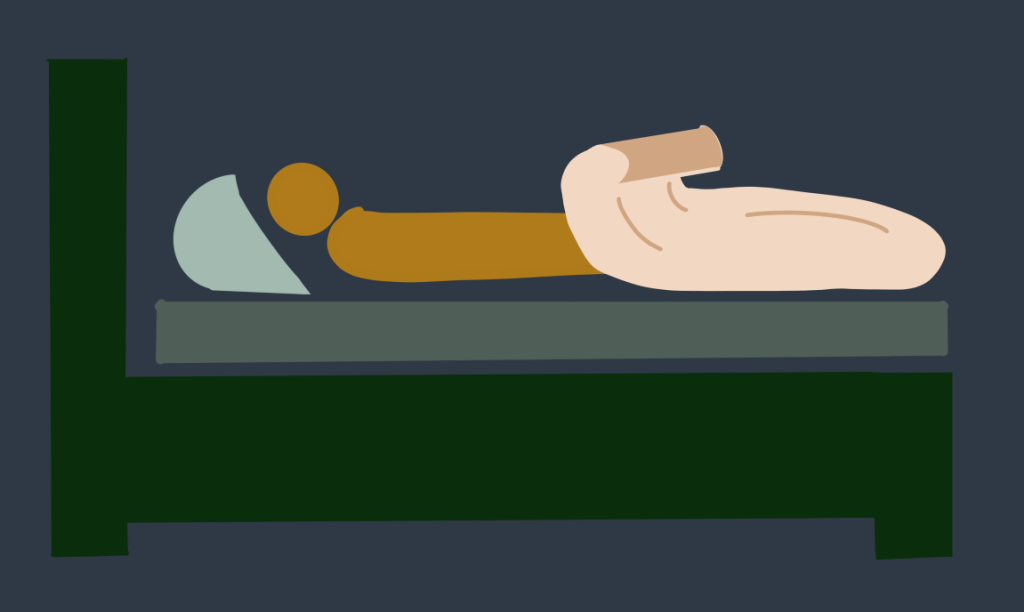
All these states are not necessarily supposed to happen, and some of them could get skipped after the quilt has learned from the behaviors of the user. Some users get up easier when they are woken up in a way that they could jump out of the bed immediately (roll state), some need to take their time, otherwise they wouldn’t feel good afterwards.
The characters of the object make it more familiar to the user, i.e. the object acts like a concerned and loving parent who would wake their child up in the morning, sometimes gentle and, other times strict.
We tried to use the three phases mentioned in the paper [2], ‘conceptual’, ’embodiment’ and ‘enactment’ in the same order. The targeted users are people who have difficulty sleeping/waking up and want a better quality of sleep, on top of waking up on time. Regarding the embodiment phase, we had to search for existing materials and technologies that can create waves and movements in the quilt and be soft at the same time. Due to the shortage of time and working remotely, finding suitable materials for our project online was the most we could do. Therefore, I do not have much more to say about the material itself.
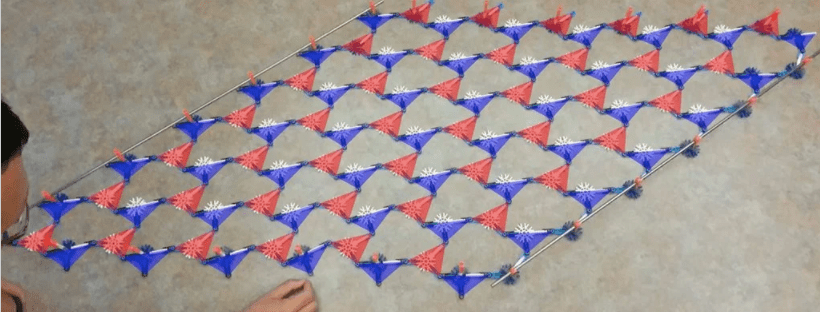
Regarding the enactment phase, we tried to role play (in a Wizard of Oz way) the different states individually at home, with the help of someone moving a quilt for us, of course.
Feedback
One of the topics we did not mention in our presentation was what would be the situation if the user does not sleep alone and shares a bed. The quilt is a one-person sized object, so this would not be a problem. It would actually be beneficial in some cases that one partner’s alarm goes off, waking the other partner up, and then it would be their responsibility to wake the first person up.
References:
[1] Vallgårda, A., & Redström, J. (2007). Computational Composites. Computer/Human Interaction conference (CHI).
[2] Rozendaal, M. C., Ghajargar, M., Pasman, G., Wiberg, M. (2018). Giving Form to Smart Objects: Exploring Intelligence as an Interaction Design Material. Springer International Publishing.
[3] https://www.sciencealert.com/new-metamaterial-design-can-switch-from-hard-to-soft-and-back-again
 My Design Journal